Year: 2022

  • A comprehensive guide to Enterprise UX

    A comprehensive guide to Enterprise UX

    [vc_row][vc_column][vc_column_text]Today, Enterprise UX has defined a compelling way to define user experience at work and the right balance. It is something that is impactful, pertinent and has the capacity to stir the change.

    What is Enterprise UX?

    To put it in simple terms ‘Enterprise UX is the design of software that assists employees in doing their tasks. It is the creation of everyday technologies such as Slack or Asana that are utilized in the workplace. In contrast to consumer UX, enterprise UX design focuses on designing for professionals at work. In more practical terms, enterprise UX apps are complex b2b solutions for major businesses.

    Enterprise UX plays an imperative role in invoking a sense of excitement, and closeness and bringing game-changing results for achieving goals.

    As per research every $1 invested in UX brings $100 in return. That is an ROI of mammoth 9,900%

    Give an experience that will make work fun 

    A meaningful interaction never fades. Let your users at work experience something conclusive that makes their work fun and gives them an enriching experience. This brings in an element of creativity and higher productivity which are key indicators of a good day at work.

    Win the competition and soar high in the market 

    The next big thing that has particularly changed the dynamics today is enterprise UX. To soar high and construe a unique position in the market is to be a step ahead in thinking of solutions that will bring an impact. Enterprise users are (primarily) power users, and must be considered this when developing products for them. They work with specialty software regularly, and maybe for a long time. They understand the logic behind the items they utilize. Bring that logic with an impeccable experience and human-centric designs.

    Simplify Enterprise UX to provide a world-class experience 

    It is important to keep interfaces simple and humanized. However, the complexity of the tasks generally performed incorporate software must be considered. The desire for a clean UI may deprive users of critical context for getting work done.

    Furthermore, it may be argued that simplifying the interface too much may increase the risks of creating friction rather than removing it. Consider the user interface of a product that shows a variety of charts and data.

    A professional who works with visual data on a regular basis requires constant access to it. Having to go through extra steps to get to important features is both inconvenient and ineffective. One of the most notable contrasts between consumer and enterprise UX is providing easy access where no extra actions are required.

    Consumer UX is all about beautiful UIs, whereas enterprise software needs to make sure users can do their jobs easily. Hence, it is not just about simplifying enterprise UX but also providing utility and immediate access interface.

    Leverage technology at the click and create a better sync

    Integrating design thinking in software that is appealing, can assist in creating a better sync. Despite the difficulties of workplace UX, a positive user experience can be achieved. Follow a simple rule that we always follow while building consumer products. If we follow a similar philosophy, the end-user first can bring in the best of technology to unfold the best of user experiences.

    Innovation is the key, make the best of it with impeccable functions 

    In today’s fast-moving world there’s nothing without innovation and you can innovate when you know the right solution. The biggest challenge while doing the UX research is deciding how to simplify enterprise UX. It is imperative to bring an experience where the core competency is to build a product that is easy to use, powerful and compelling to derive action.

    Changes are for the better, it’s time for you to bring the change

    To go deeper and stronger while creating an experience the key is to define change. Define copy and design elements that are easy to interact with and are more human. Don’t be generic it too boring in today’s fast pace identity-defining world. Bring inconsistency of brand identity and define your labels with values of design thinking and let your brand personality shine.

    In the nutshell 

    An enterprise UX can create value that one would have never imagined, it can create an understated difference. Be simple, be innovative, and be a forward thinker to accelerate your pace with enterprise UX. A stellar user experience with power-packed functionality will go a long way.

    • Integrating designing thinking will lead to the ultimate, futuristic, and holistically optimized organizational growth.
    • Enterprise or not, innovation is a critical component of UX design. Be attentive and find new and innovative solutions to existing challenges regularly. Be the change and take the risk to propose experimental solutions on occasion.
    • Small changes create big differences and sometimes less is more. Create a statement by creating human-centric products. Humanizing your enterprise UX can create an impact that will and build value that will have a long-term effect.

    Product and service design that is simple and straightforward is beneficial to your bottom line and brand value.[/vc_column_text][/vc_column][/vc_row]

  • Understanding Agile Design

    Understanding Agile Design

    [vc_row][vc_column][vc_column_text]Over two decades ago, agile methodologies were merely a set of best management practices set for developers. These methodologies in today’s day and age have spread out across several verticals of an organization.

    What is Agile Design?

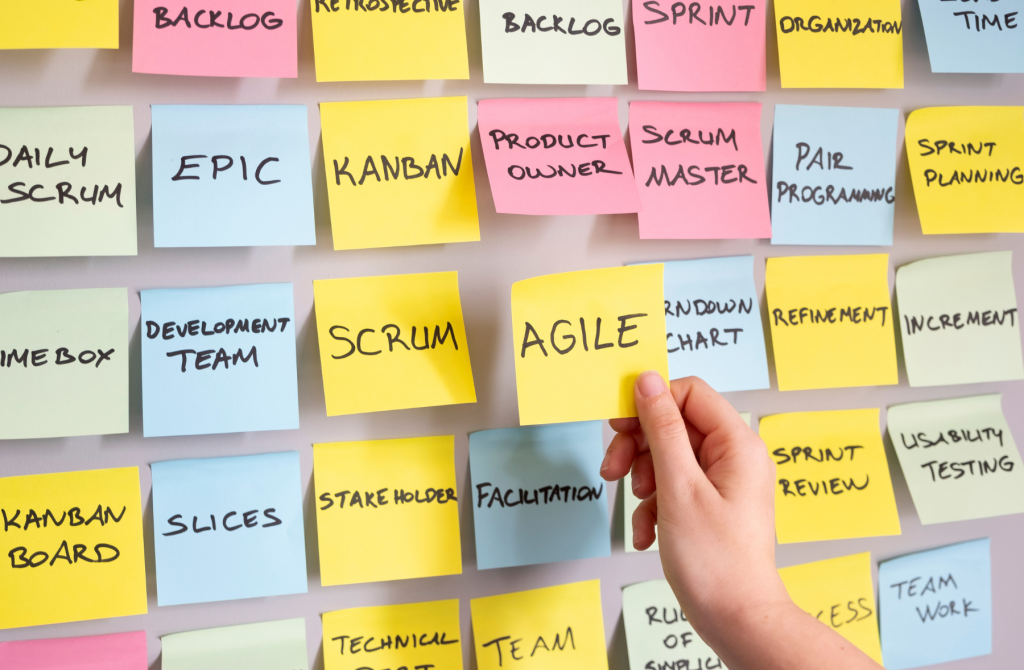
    In layman’s terms, ‘Agile’ is a member-oriented management system, intended to make different teams considerably more versatile to changes. The purpose of the introduction of Agile is to shift focus from inflexible processes to more real human interaction.

    Agile Design is an exceptionally cooperative method of developing and planning new products that break large undertakings into gatherings of subtasks to be acted in short time-boxed periods – referred to as ‘Sprints’. These tasks are consistently reported to the teams in casual scrum meetings driven by a – Scrum Master.

    Reason for the popularity of Agile Design

    The major reason for the soaring popularity of Agile Design is due to its iterative nature. Iteration in agile refers to the process of repetitive refining until a satisfactory product has been developed. Through agile, teams can improve their product with every iteration and decide on improvements needed with every short iteration.

    Approximately 90% of business units that had fully adopted an agile model before the pandemic performed better than the other business units which had not adopted an agile model.

    Benefits of Agile Design Methodology

     The Agile Design plan has an expansive range of advantages. Some of these benefits include:

    • An iterative interaction both permits to recognize issues and answers them swiftly
    • An iterative interaction creates a more transparent work culture
    • Clients are more included in the process and give groups significant input at all means of the overall agile process cycle
    • Constructive feedbacks during iterations assist teams in staying motivated
    • Agile helps in the early identification of bugs or design issues during the development process, which helps in saving time and cost.

    Incorporation of Agile Design Process

     As mentioned earlier, the agile design process involves an iterative approach but also uses an incremental approach; under which, the system segregates the work into smaller parts and comprehensively focuses the attention on individual parts. Incorporation of this approach helps in the following:

    Changeable: Any changes within the design process are possible assuming that any progressions are expected in the plan. There is an appropriate capacity for the changes, and any alterations in the design are fairly feasible.

    Feedback: Effectively communicating with the client to know their prerequisites and get the input of the client in regards to the product and roll out vital improvements according to the feedback provided.

    Development: Delivery of small portions of the design to the development team allows a swift implementation process. The teams do not spend time on allied processes, which further facilitates a smooth process.

    Steps undertaken in Agile Design Process

    An Agile design process includes the following steps:

     Design: It is the initial task at the inception of the project and requires adequate attention. The best design is that which is customer or client-driven and results in more productive outcomes. Additionally, the team that takes the responsibility for making a superior agile design and pays appropriate vigil on the project so that no time and resources are wasted.

    1. Analyze: When the design is finished and work is on target, appropriate analysis is required occasionally so that the extent of the shortcoming can be eradicated and the quality of the product can be sustained. Analysis of the design is also useful for the teams to finish their respective work in the given time.
    2. Develop: After the analysis of the design, the product is ready to be developed. Develop here however refers to the development of the required project management software, which is a key element of the project after its conclusion. Management of the product and project is crucial, especially after the execution of the project and thus, appropriate management protocols are required.
    3. Implement: The last stage of the agile design process is the implementation of the project and its execution. In this stage of the process, the feedback on the design is crucial as any feedback can be incorporated by the team. Likewise, the fulfillment of the customer/client is another crucial agenda after implementation.

    Methodology of Agile Design

    Various methodologies are utilized to make the work more straightforward and smoother; for the various activities, there is an alternate methodology. Some of these methodologies include:

    Agile UX: The UX variant or this sort of methodology centers around the result of the task as opposed to the negative perspectives on whether the product is successful or not.

    Scrum: It is the broadly used methodology in the market when enterprises contemplate working in agile. Under this type of methodology, both the preparation and execution of the task occur simultaneously. Along these lines, it is one of the more straightforward methodologies to be worked in agile.

    Crystal: This methodology centers around the key areas of the project and focuses on the project’s significant needs. Customer satisfaction is the main objective of this methodology.

    Extreme: This methodology focuses mainly on the end product and is utilized majorly for software development to ensure that the product is well suited to the needs of the client/customer.

    Road Ahead

    Agile design and its methodologies involve their own set of pros and cons. Even though the benefits and the features provided are exponential, there is some scope for improvement expected in certain areas. The execution and implementation prove to be a strenuous process due to difficult protocols and due to the process being more customer-centric. Nonetheless, through its combination of both iterative and incremental approach, the Agile design process surpasses any conventional iterative design processes and are a better option for enhanced productivity along with customer satisfaction.[/vc_column_text][/vc_column][/vc_row]